
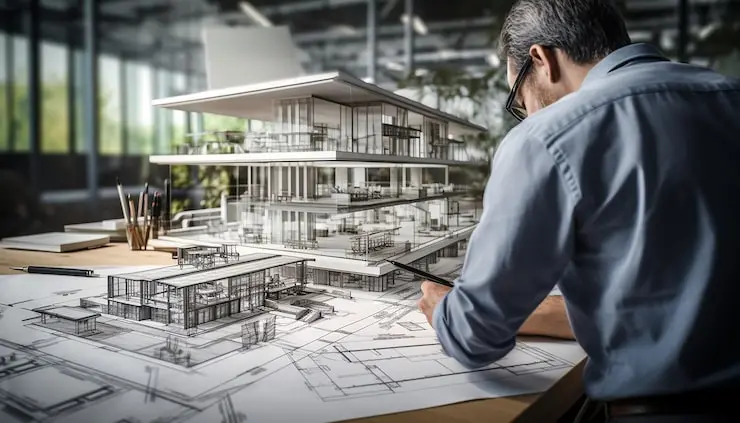
If you look back, you will know that architects used hand-drawn and 2D drawings to construct the architecture of a building. This usually leads to obstacles like rework, design errors, and miscommunication. But now the demand for technology is there. Architects use BIM, which enables them to see the final look of the project in advance and adjust the design as needed. This maximizes the chances of delivering the expected results and increasing the reliability of the building.
BIM in architecture is demanding now to achieve flawless results and maximize ROI. If you are an architect and want to know more about the role of BIM in building architecture, then stay with us till the end. We will discuss in detail and explain every aspect of them. So let’s get started.
BIM In Architecture
BIM creates 3d data rich models by using your project specifications and the architect’s design that shows a real picture of your project in advance and provides cost estimation. It also meets legal regulations and building standards. By using them, you can build precisely and order materials as needed, avoiding expensive errors.
Building trusted relationships with contractors, MEP consultants, and structural engineers through shared technologies is also a top priority for BIM to keep everyone informed of current schedules and cost changes. It also reduces disputes, miscommunications, and costly construction errors.
BIM is also essential for accurate construction in the AEC sector. Each member performs their responsibilities using different drawings. If there is a change, it is important to inform each member, so they can build accordingly. For this, BIM helps you a lot. It automatically updates the drawings of every trade according to the new changes. In addition to improving communication and project efficiency, BIM also increases design accuracy and resource allocation.
Key Benefits Of BIM In Architecture
Using BIM in architecture gives you many benefits. Let’s read what they are.
Effective Communication
BIM is a single source file on which all team members can work in real time and can make changes as per requirements. So, we can say that from architectural designs to digital twin creation, it enhances the communication between stakeholders like architects, engineers, and contractors and reduces the clashes and conflicts. To know this process in detail, read our blog, BIM coordination workflow explained: from model setup to clash resolution
Improve Design Accuracy
BIM provides models that are created with accurate measurements of elevations, sections, and lengths, so architects, contractors, and engineers can see the project in real-world conditions and begin construction with accurate designs. It also detects clashes in models with new tools to ensure their accuracy and quality before starting.
Cost Control And Time Saving
If you want to control costs for maximum ROI and avoid delays in delivering projects on time, you need 4D and 5D models generated by BIM. Using them, you can complete projects within budget and meet deadlines, which makes your clients satisfied with your services, and they trust you again. BIM also detects errors that can cause rework and budget overruns, allowing them to be resolved on time, and construction can continue without interruption.
Sustainable Performance
BIM encourages contractors, architects, and engineers to use solar systems, energy-efficient construction materials, recycled materials, and thermal efficiency to enhance the sustainability of a building. It brings green buildings, saves you money, and reduces your carbon footprint. Through this, architects get not only aesthetic but also efficient buildings.
Functional Building Management
You also get a 6D model in BIM that provides material specifications, warranties, and lifecycle data to manage the building after construction is complete. It also helps in tracking assets, planning material repairs, and maintenance. You can make the right decision for building efficiency and sustainability.
How Do Architects Use BIM In Projects?
BIM models are used by architects to create effective designs and then pass them to the contractors for final on-site work. Let’s discover how BIM helps architects to spark 3D life in their conceptual designs.
Conceptual and Schematic Design
If you rely solely on hand-drawn sketches for your architectural design ideas, you will only realize flaws during construction that cause various challenges. But with BIM, you can analyze your design deeply and know how it will perform against the local environment. At this stage, you simply capture your design digitally and ensure to maintain its intent.
Design Development and Coordination
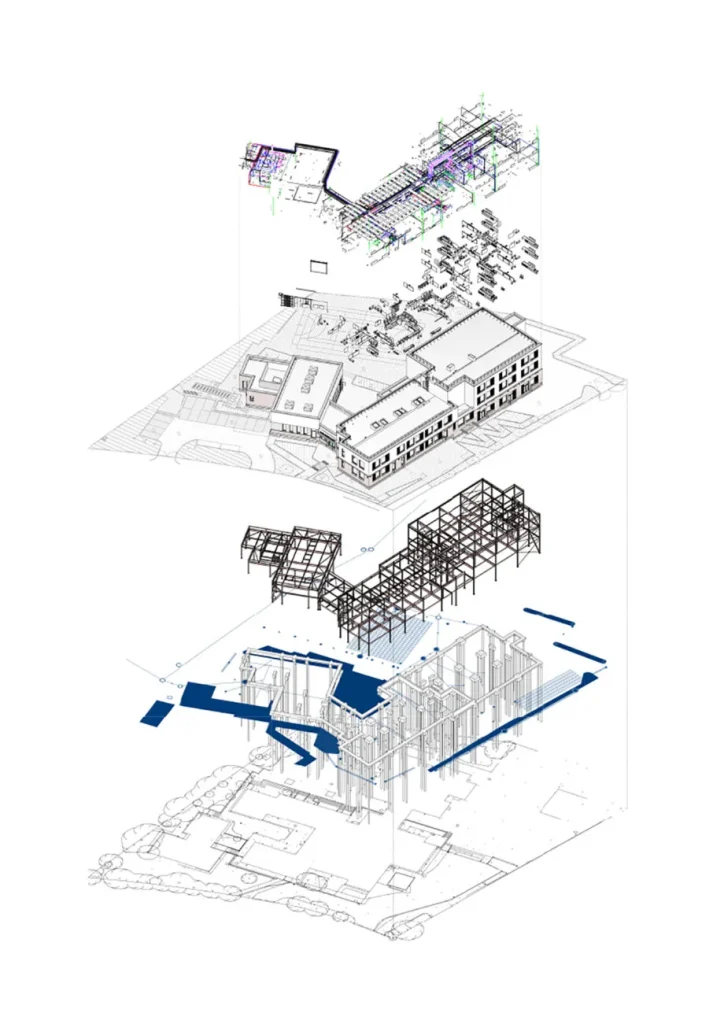
In this phase, the design is organized into computable data models and clearly defined material specifications and their systems. Then, the whole building system is aligned with the structure and MEP to detect clashes with advanced tools and ensure their integration. This allows for strong collaboration, reducing redundant work and errors.
Renovation and As-Built Modeling
Architects also use BIM in renovation projects because it helps in reconstructing the architecture without interfering with the existing structure and MEP system. It enables architects to build without interfering with other areas, avoiding rework and additional costs. BIM also delivers as a built model that assists in building management after renovation.
Construction Support
BIM architects support the overall construction process. From reviewing shop drawings to resolving issues to strengthening collaboration, it plays a vital role. You can also monitor the process and maintain accuracy to deliver expected results. With BIM, you can be able to complete the project on time and within budget.
BIM VS Traditional CAD In Architecture
BIM and traditional CAD work differently in construction projects. CAD is risky and prone to errors because it only provides 2D drawings that just show layouts and plans. Whenever changes occur in design, architects manually adjust to new requirements. On the other hand, BIM provides detailed information about architectural design, construction, and maintenance. This also detect clash and ensure architecture is integrated with other building disciplines. Further, BIM for architects also provides 5D, 6D, or 7D to manage cost, schedule, and facility.
| Aspects | Traditional CAD | BIM |
| Modeling | 2D drawings (and flat 3D) made of lines/arcs. | parametric 3D objects with embedded data |
| Data Integration | geometry-only | integrates materials, costs, and schedules |
| Collaboration | file-based sharing with risk of mismatched updates | multi-user, single shared cloud model with clash detection |
| Documentation | separate drawings requiring manual updates | drawings auto-generated from model (100% coordination) |
Need Expert BIM Support for Your Architectural Projects? Contact Our Specialists Today!
Contact UsCommon BIM Software For Architects
Using software to accurately fit your design into the model is a common practice during modeling. For this, modelers use many authoritative tools, such as Graphisoft ArchiCAD, which is suitable for design-oriented processes, Autodesk Revit, which is excellent for extensive parametric modeling, and SketchUp, which is popular for its versatility. With their use, conflicts are resolved, risk factors are removed, and visualization is improved.
You can also read our blog about the Top 10 BIM software tools in 2026.
| Softwares | Key Features | Typical Use |
| Revit | Standard, strong ecosystem | Best for large multidisciplinary projects |
| ArchiCAD | Intuitive UI, strong visualization | Good for design-driven firms |
| Vectorworks | Superior graphics | Great for landscape/architectural graphics. |
Challenges And Solutions For Architects
Although BIM is very beneficial for architects, there are some challenges as well when dealing with BIM solutions. In the section below, we will explore these challenges and will explain the possible solutions to fix them.
Steep Learning Curve
Building Information Modeling is complex and requires architects or technicians who can read the parameters and understand you. For this, you can implement external training or start adopting BIM for some selected part of the buildings, except for a complete project, which can be more complex.
Resistance to Change
BIM is complex, and its drawings are difficult to understand, which is why architects are hesitant to switch from CAD to BIM. But keep in mind, there is no doubt that BIM is difficult to use, but with this, you can protect your project from losses and unforeseen situations until the end.
Data Management
Poor data management can leave you with design errors, outdated models, and confusion. But with BIM and architecture, data about costs, materials, and installation is distributed across the building discipline, making the project run smoothly. To ensure that each model is updated over time and accommodates new requirements, use cloud-based BIM.
High Initial Costs
When you use BIM, you need to hire BIM experts and software licensing staff. Their fees reduce your profits and put a burden on your budget. For this, you can start investing only in the necessary software and adopt cost-effective alternatives.
Future Trends In BIM For Architecture
BIM is continuously evolving the design ways for construction projects. Let’s have a look at the emerging technologies in BIM, which will definitely be a good addition and helpful for contractors, architects, and BIM modelers.
Digital Twins And IoT
Digital twins are BIM models that are replicas of the physical building. It updates operational data with the help of IoT sensors. BIM not only helps you build but also helps manage the building lifecycle.
Architects can monitor energy consumption, space utilization, and analyze HVAC performance in real time to improve future design decisions. This brings about a better and smarter building system.
Immersive Tech (VR/AR)
VR and AR are commonly used in BIM for different purposes. Virtual reality plays a role in enabling architects to walk through models to analyze designs. It also improves client understanding and speeds up approvals.
whereas Augmented Reality uses cameras to impose digital components on the real world. This facilitates better quality control, quicker problem-solving, and clash detection.
Sustainability And Regulations
A clean environment now requires sustainable architecture; it is no longer a choice. To help you design green buildings with energy-efficient layouts that lessen your carbon impact, BIM works in collaboration with LEED certification. Green buildings improve shading efficiency and ventilation efficiency. More BIM data supports the optimization of smart city infrastructure and energy networks.
AI And Generative Design
AI is becoming a powerful tool for use in BIM modeling, where algorithms help create models within site conditions, building codes, structural requirements, and budget limits. In addition, artificial intelligence can generate and review hundreds of layouts at a time.
But keep in mind that AI cannot replace architects because a human knows best what strategies, aesthetic decisions, and insightful proposals are best for a project according to its needs. AI only enhances an architect’s creativity and knowledge.
Stay Updated
BIM requirements are changing rapidly. That’s why architects should stay updated with them regularly, sharpen their AI skills, be adept at digital technology, and understand IoT technology. Through this, you can ensure long-term performance and increase data intelligence.
Conclusion
If architects want to achieve the expected results within budget, BIM plays a crucial role. Actually, BIM is a platform where architects’ complex designs meet accuracy and perfection, and avoid rework and errors. The main speciality is that it allows the architects to digitally visualise the final design and make more insightful decisions to increase the building’s dependability and durability. Furthermore, BIM transparent the communication by promoting the use of shared tools for strong collaboration. With BIM, you not only create an aesthetically attractive, error-free building, but also maximise ROI.
Do You Need Help with BIM in Architectural Designs?
Are you ready to use BIM in your construction projects? Then invest in our company, where our expert team will listen to you and provide you with top-notch BIM services. Hire our team to complete your project within budget without costly mistakes, disputes, and misunderstandings. We also reduce risk factors and potential errors.
If you want to know more about BIM functions, you can explore our free guide. We provide you with a blog section, construction trends, and insightful decisions.
Frequently Asked Questions
What is BIM in architecture?
BIM is a platform that allows its architectural users to create 3D design models. It also ensures the integration of architectural designs with other project systems.
How does BIM help architects?
When architects choose BIM for a project, it can not only avoid errors, speed up approvals, and reduce risk factors but also improve resource allocation and decision-making ability.
Names of BIM software that are commonly used by architects?
Autodesk Revit and ArchiCAD are the most common BIM tools. Architects choose the software based on the complexity and type of project.
How can I learn BIM?
You can learn BIM through professional certification, programs, and by getting in touch with our courses. But you can sharpen your skills by practicing architectural projects.
Who can use BIM for architectural projects?
Whether your architectural project is commercial, industrial, or residential, you need BIM to stay on budget and on track.
Can we do facility management with BIM after construction?
Yes, you can because BIM provides a digital twin model that helps track assets and performance after construction.
