
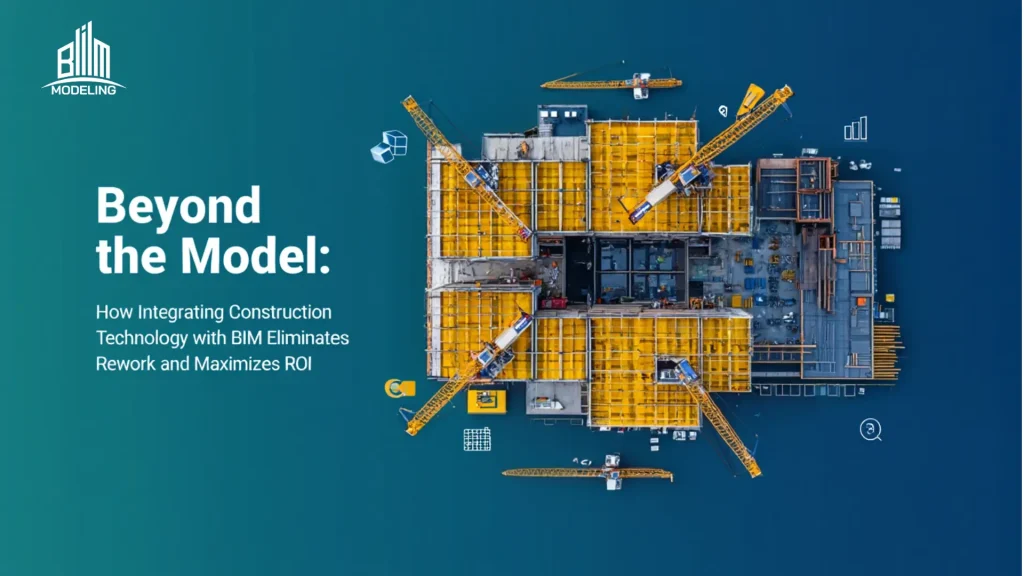
Many contractors face this issue on-site. The BIM modeling team has invested hours in drawings. Still, the field team is sitting with many confusing points and changing orders. If not resolved on time, this reduces the contractors’ profit.
How can you avoid those issues? You can streamline the construction plans by integrating construction technology with BIM. It will eliminate a bundle of rework and maximize ROI. Let’s see how! But, take a start with the issues with BIM-only modeling.
Why BIM 3D Models Aren’t Enough?
● Lack of Coordination
In the construction sector, everything must be well-coordinated because siloed data always leads to cost and time overruns in the form of rework and affects project ROI. When a team relies on BIM-only modeling, disconnection becomes common.
For example, designers update the drawings, but due to a lack of connection, field teams still use the printed drawings. This leads to significant errors, particularly in the installation of the system.
● Outdated Drawings Use
Field teams plan the ordering of required materials from drawings. When they rely on outdated drawings, they extract the wrong takeoffs and thus order the inaccurate material quantities, which might be less or more than the required ones.
Whether more or less, both cause issues when it comes to project cost:
- Less leads to a shortage of materials (need for rush orders and extra material expense).
- More quantity leads to excess waste production (increasing the waste management cost).
● Human Error in Manual Processing
BIM-only modeling means the integration of manual work, which leads to a lot of human errors and ultimately money and time wasted.
What Is Technology in Construction?
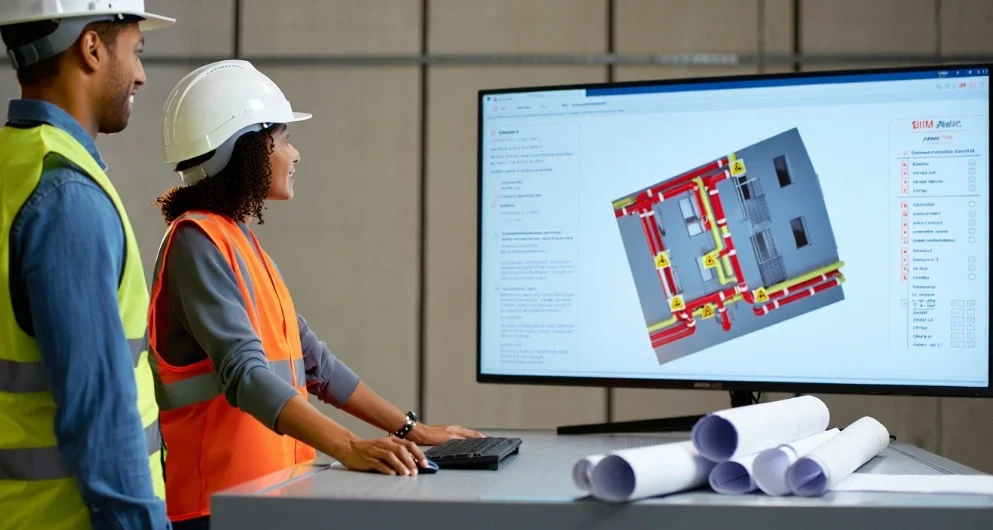
Construction technology includes the tools, software, and devices that enable building work smarter. It includes everything from drones and laser scanners to field management platforms and IoT sensors. These solutions boost project efficiency, improve safety, and cut unnecessary costs, hence boosting project ROI and contractors’ profit.
Role of Technology in Construction
Building construction technology is evolving day-after-day, playing the following roles:
- Helping you capture site conditions in real time.
- Using it, you can track project progress against the model instantly.
- PMs can ensure that labor is focusing on skilled tasks instead of struggling with paperwork.
Let’s see more in detail below!
● Real-Time Data Analysis
Today’s contractors and builders use a real-time data analysis platform to keep things in front of their eyes all the time. By integrating construction technology with BIM, they ensure that the data flows bidirectionally, field changes update the master model, and the model guides field work with precise instructions. This two-way method eliminates many problems before they start.
➔ Single Source of Truth
BIM works best as that single source of truth, but only when you connect it deeply with on-site tools. Integration tech and BIM mean seamless data exchange between the central model and field applications.
➔ Elimination of Manual Entry Errors
BIM and tech together enable you to eliminate manual entry errors from the plans. Do you know how it works? Laser scanning feeds point clouds directly into the BIM platform, and progresses photos and sensor data overlay on the model. Ultimately, everyone sees the same live picture of the project.
The focus point is the clash detection that runs continuously. The system flags conflicts early, enabling teams to resolve issues in the modeling weeks. This leads to almost no surprise demolition and zero wasted materials.
➔ Better Interoperability
Reality capture plays a huge role in modern construction. Today, you can scan as-built conditions with high accuracy and compare them against the design model instantly. This way, you will get deviations immediately that help you correct the course before small issues become big problems.
Interoperability makes this possible. Open standards let different software connect. Project management platforms push task updates back to the BIM model. Following this, subcontractors access only the data they need, which keeps the set consistent for all.
Consequently, teams avoid outdated drawings, ensuring that the field teams put fresh views on tablets. Furthermore, markups flow back, the model evolves with the build, keeping everyone aligned from project start to the end.
● Clash Detection
Clash detection is one of the prominent factors in the modern construction world. In a coordinated BIM environment, software automatically checks for spatial conflicts across disciplines. This ensures that mechanical, electrical, plumbing, and structural elements all get reviewed together.
➔ Error-free Project Run
You can run these checks early and often during the project run. Once an issue is detected between a sprinkler line and a beam, it can be resolved in minutes during coordination meetings. Coming to on-site, that same issue resolution will save significant time.
Integrate BIM with construction tech to cut rework and boost ROI.
Contact UsIncluding time benefits, RFIs related to coordination are reduced, change orders tied to design mismatches are cut, and labor stays productive, since everything goes smoothly without mistakes.
➔ Proactive Prevention
You might be thinking about stopping clashes at the design phase, which is really a challenging task. Don’t worry, because ongoing integration of BIM with tech keeps detection active throughout construction.
As field conditions change, scans update the model with new potential clashes, which you can address proactively. This approach turns BIM into prevention instead of reaction, enabling you to save time and money.
Also read: BIM Coordination Workflow Explained: From Model Setup to Clash Resolution.
● Better ROI for Each Project
ROI means return on investment. You can calculate it by comparing gains against the costs of technology and integration. In construction, the wins show up in saved hours, reduced material waste, and faster project delivery.
➔ Significant Time Saving
Shorter schedules create huge value in a construction project. When you cut rework and coordination delays, you often finish weeks or months ahead. Earlier handover means earlier revenue for owners. This helps contractors free up resources for the next job.
➔ Lowers Insurance Premiums and Enhances Site Safety
Lower insurance premiums can follow too. Fewer safety incidents happen when teams work from accurate, coordinated information. Furthermore, predictable workflows reduce rushed decisions and improvised fixes.
➔ Material Savings
Material waste drops because quantities come straight from the updated model. You can order precisely what you need, making overages and shortages rare. Moreover, prefabrication is improved because the model reflects real-world conditions.
➔ Better Client Handovers
Additionally, client handovers get smoother. The as-built BIM model includes all field-verified data, ensuring that the facilities teams receive accurate information for maintenance. This leads to no hunting through paper records or guessing about hidden systems.
Example
Imagine a mid-size commercial project. Without strong integration, the team relies on periodic updates. These updates make drawings go out, field conditions change, and by the midpoint, the team discovers multiple MEP clashes. Furthermore, rework needs come and increase the project cost and timeline.
Now flip the script with complete integration of tech with BIM.
- Laser scans feed weekly into the BIM model.
- Clash detection runs automatically.
- Field apps let teams report issues instantly.
- The model stays current.
- Coordination meetings focus on optimization instead of damage control.
- The project finishes ahead of schedule.
- Materials reach exactly as needed.
- The outcome includes a reliable digital twin.
Considering both scenarios, the first leaves everyone exhausted and questioning the process, while the second builds confidence. Teams end the job proud and ready for more.
Also read: Digital Twin in Manufacturing: Bridging the Gap Between BIM and Smart Operations in 2026
Challenges When Integrating BIM with Tech
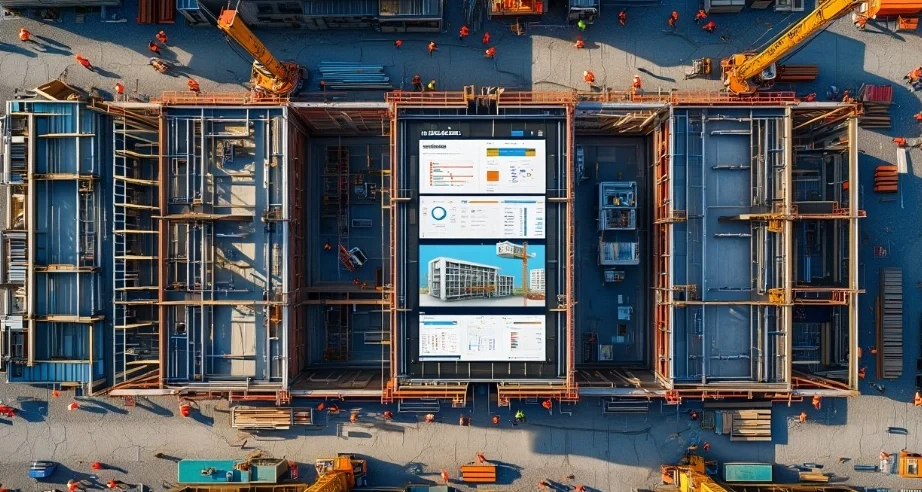
Even tech-savvy firms hit hidden gaps when integrating BIM with new technologies. Some update the model but forget to push changes to field devices. Others capture great scan data yet never reconcile it fully with the design intent.
● BIM Training Gaps
Training gaps matter a lot when something new is added to the workflow. The team receives tablets but lacks clear processes for using them daily. This leads to inconsistent data entry.
● Tool Interoperability Issues
Interoperability issues persist when teams mix incompatible tools. Information gets trapped in silos again, and manual work jumps in again.
● Integration Audit Challenge
This requires a deep dive into your digital stack to identify where data flow collapses between systems. It involves mapping every manual touchpoint to pinpoint high-risk error zones that threaten your project’s budget and schedule.
Final Words
Integration turns BIM into more than 3D visuals. It becomes your profit protector by keeping the model alive and connected to actual construction.
Now, you can reduce rework significantly when data flows freely, and clash detection stays active. Furthermore, it reduces the schedules, cuts waste, and improves collaboration. Ultimately, ROI builds through direct savings plus indirect gains in predictability and team performance.
So the construction technology pays for itself by letting you deliver better projects faster. But success demands more than buying software. You must close the gaps between design and execution. Treat integration as an ongoing process, not a one-time setup.
Ready to Close Your Data Gaps?
At BIM Modeling, we help construction teams make this transition practical and profitable. Our experts audit your current workflows, recommend targeted integrations, and support implementation that fits your projects. We offer many solutions, including BIM coordination services & MEP clash detection services. Contact our team and let us review your tech stack together and map a clear path forward!
FAQs
By what percentage does BIM-tech integration reduce rework costs and time wastage?
Bridge project analyses show 70–85% less time wasted on rework and 65–75% savings in associated costs versus traditional methods. Up to 90% of rework becomes preventable when clash detection and real-time scans operate continuously.
How much can automated clash detection save on a real infrastructure project?
BIM clash detection on a $75 million scope resolved conflicts pre-construction and delivered $15.2 million in savings, which is equal to 20% of contract value, by eliminating downstream demolition, material waste, and change orders.
What measurable timeline improvements occur with real-time BIM and field technology integration?
Projects achieve 15% faster overall delivery and 40% fewer unbudgeted change orders. Weekly laser scans and field apps keep the model current, shifting coordination meetings from damage control to optimization and finishing weeks ahead of schedule.
How does integration lower overall project failure costs?
Without integration, failure costs (rework, reordering, delays) average over 11% of project value. Full BIM-tech adoption drops this to approximately 7%, directly protecting margins through fewer errors and more predictable outcomes.
